Local Lakes Water Quality Study: Investigating Microplastics and Climate Impacts in Newhalen-Area Waters
Project Summary
Newhalen School students studied climate change impacts on local water quality by collecting samples from multiple area lakes, measuring indicators like clarity and temperature, using microscopes to identify microplastics and debris, and presenting their comparative findings at a class-wide science fair.
Detailed Story
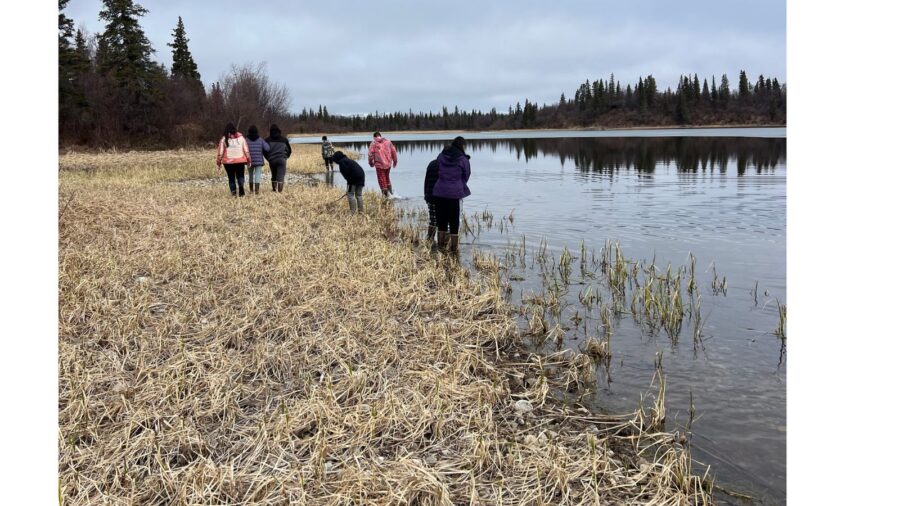
Students at Newhalen School conducted a comprehensive water quality investigation that connected climate science education to hands-on environmental research in their own community. After learning about climate change with a specific focus on water quality through TCI’s Climate Change and Health Learning Lab, students explored how environmental changes can impact local water systems and discussed why maintaining clean, healthy water is important for both ecosystems and people. Students then ventured into the field to collect water samples from several lakes in the Newhalen area, following a structured scientific process to analyze the quality of each sample. At lakeshores throughout the region, students carefully gathered samples and began initial observations. Back in the classroom laboratory, they measured multiple water quality indicators including clarity, temperature, and other observable characteristics, creating systematic datasets for comparison. The investigation went beyond basic water quality parameters: students used microscopes to examine their samples for microplastics and other tiny debris that can negatively impact aquatic ecosystems. By identifying and recording the presence of these small pollutants, students gained hands-on experience in scientific observation and learned how human activity affects water quality on a microscopic level—making the abstract concept of pollution tangible and visible. This detailed data collection not only strengthened students’ investigative skills but also provided the foundation for a class-wide science fair project. Students analyzed trends, compared results across different lakes, and shared their findings about the state of water quality in their local community. The place-based approach proved especially powerful: students were studying their own environment rather than learning about abstract concepts from a textbook, developing a stronger sense of connection, responsibility, and motivation to take care of the waters they depend on.
Impact Statement
15 students conducted water quality research across multiple local lakes. Collected and analyzed water samples measuring clarity, temperature, and other indicators. Used microscopes to identify microplastics and debris in local waters, documenting pollution at microscopic level. Developed scientific observation and data analysis skills through systematic comparison across sampling sites. Presented findings at class science fair, sharing water quality research with broader school community. Connected climate education to tangible local environmental issues affecting their own community.