
Living Shorelines: Coastal Restoration from Kentucky to Charleston
Project Summary
Kentucky students traveled to Charleston, SC to learn about and participate in coastal restoration through planting Spartina grass and learning about oyster reef rehabilitation.
Detailed Story
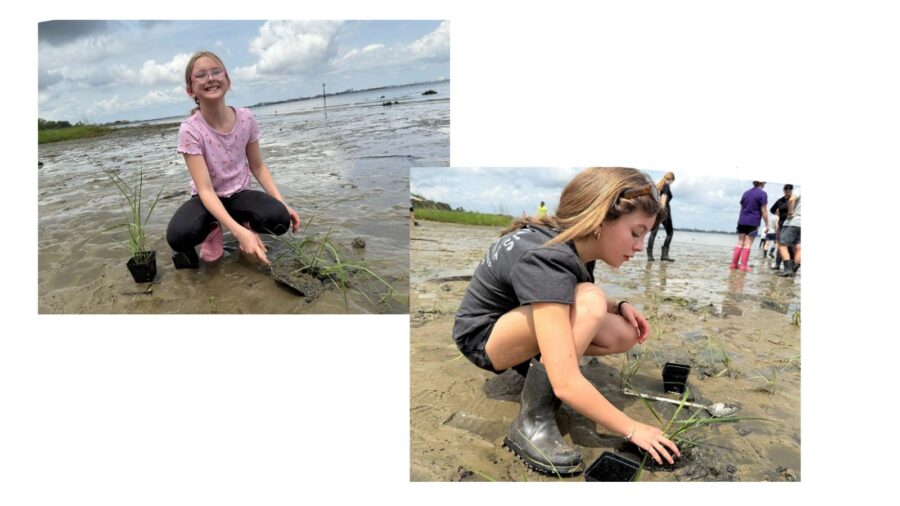
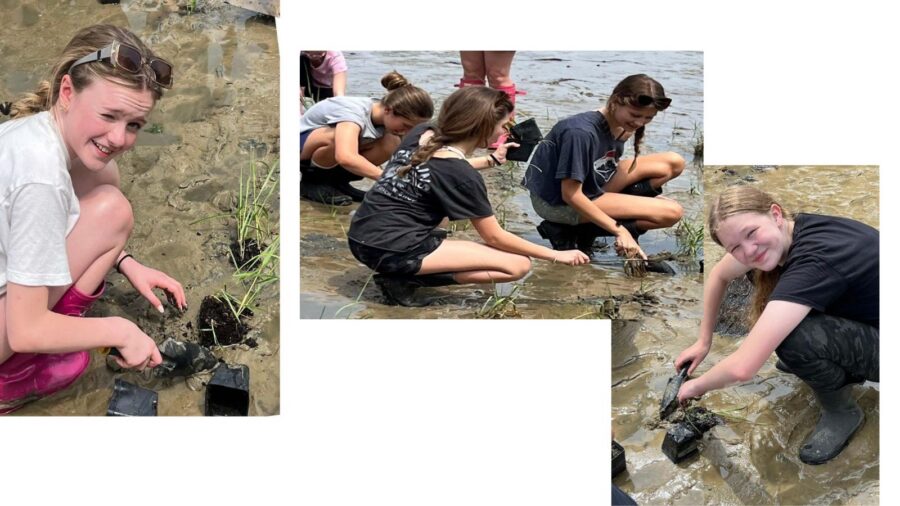
Students from Redwood Cooperative School in Kentucky applied their learning from the Sea Level Rise Learning Lab to hands-on coastal restoration work in Charleston, South Carolina. Despite being from a land-locked state, the students expanded their understanding of sea level rise to include both coastal implications and local impacts. The project culminated in a field experience at the Fort Johnson campus of the South Carolina Department of Natural Resources, where students partnered with the Sustainability Institute to study coastal erosion and living shoreline solutions. Students received practical education on oyster reef rehabilitation and community programs for recycling oyster shells. They learned how planting Spartina grass in marsh areas can build longer and stronger shorelines to combat erosion. The highlight of the project was getting their hands dirty planting Spartina grass along an eroded shoreline, allowing students to directly contribute to coastal protection efforts. The experience was particularly powerful as students could see the original eroded coastline behind their newly planted grass, providing a vivid before-and-after contrast that demonstrated the potential impact of their restoration work.

Impact Statement
24 students from a land-locked state gained firsthand experience with coastal ecosystem restoration, developing a deeper understanding of climate impacts beyond their local environment. The project provided practical conservation skills while fostering environmental stewardship, with students directly contributing to shoreline stabilization through native grass planting. Seeing the contrast between eroded and restored areas gave students visible evidence of how their work could help mitigate the effects of sea level rise and coastal erosion.