
Inclusive Composting: Gardening and Sustainability for Students with Multiple Disabilities
Project Summary
Students with multiple disabilities at Robert Renick Educational Center created a comprehensive composting program, transforming school waste into garden fertilizer while improving their physical and mental health through hands-on environmental stewardship.
Detailed Story
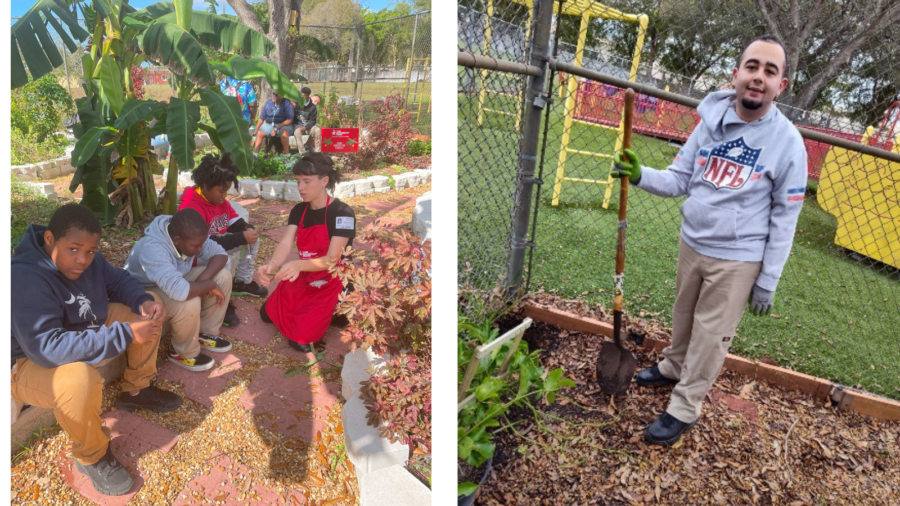
At Robert Renick Educational Center, a special day school for students with multiple disabilities in Hollywood, Florida, 34 students are experiencing the therapeutic benefits of environmental education through an innovative composting project. The initiative aims to improve students’ mental and physical health while teaching practical sustainability skills. The project centers around two composting areas in the school’s edible garden, including a large composter and a banana circle. Students actively participate in all aspects of the composting process, learning to: Properly process food waste, shredded paper, and garden weeds (after drying them and removing seeds); Monitor and maintain proper moisture levels; Turn the compost regularly for optimal decomposition. The students have expanded their efforts by collecting banana peels and coffee grounds from throughout the school. They blend these materials and allow them to ferment before using the mixture as nutrient-rich fertilizer for their edible garden. This closed-loop system demonstrates practical carbon sequestration while producing food for the school community. In another creative initiative, students intercept leaves that would otherwise be bagged and discarded by custodians. They sort the leaves based on decomposition rates – crushing easily decomposable varieties for compost while transforming slow-decomposing leaves like sea grape into art projects. This dual-purpose approach combines environmental education with creative expression. The project’s success prompted students to request worms to accelerate the decomposition process. The teaching team responded by providing a “worm hotel” where students can observe vermiculture in action, deepening their understanding of natural decomposition processes.
Impact Statement
The composting project has created multiple positive outcomes for students with disabilities. They’ve developed practical environmental stewardship skills while experiencing the therapeutic benefits of gardening. Student engagement is evident in their enthusiasm for the worm hotel and their initiative in bringing compostable materials from home. Beyond the classroom, the project diverts significant organic waste from landfills, reducing methane emissions while creating valuable soil amendments for the school’s food garden. Perhaps most importantly, students recognize they’re “making a difference for the Earth,” building confidence and purpose through meaningful environmental action.
