
GLOBE Program Green Down: Contributing Alaskan Phenology Data to NASA Climate Research
Project Summary
🌿 2026 Changemaker Award — Honorable Mention, Elementary School
Newhalen School students participated in the GLOBE Program through University of Alaska Fairbanks, conducting systematic “green down” observations three times weekly throughout early fall. Students tracked leaf color changes using standardized protocols and color charts, contributing their data to a global database used by NASA scientists to monitor vegetation changes and climate patterns.
Detailed Story
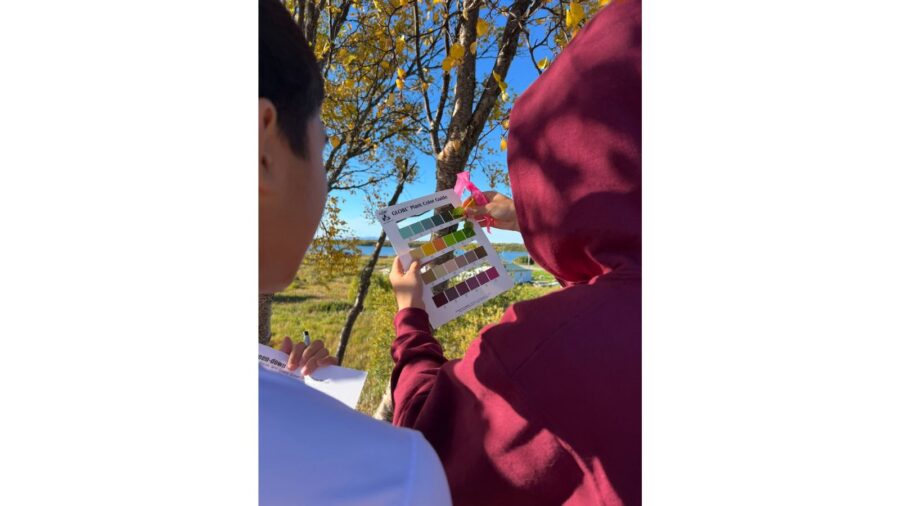
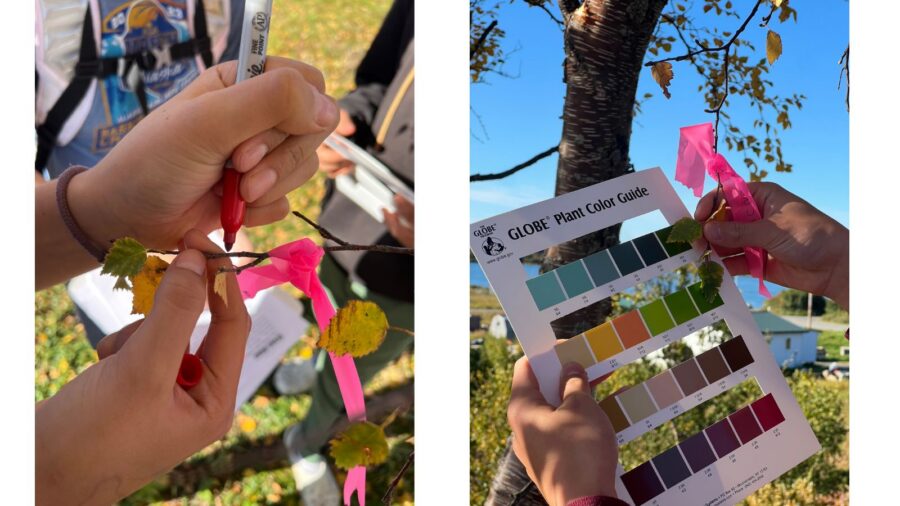
Students at Newhalen School engaged in authentic scientific research through the GLOBE (Global Learning and Observations to Benefit the Environment) Program, a NASA-supported international science and education initiative coordinated locally through the University of Alaska Fairbanks. Over the first six weeks of the school year, students conducted a structured data collection process focused on “green down” observations—tracking the fall color changes that signal vegetation responses to seasonal and climatic shifts. Three times each week, students ventured outdoors to observe the same designated trees and branches, carefully examining leaf color and comparing their observations to standardized GLOBE Plant Color Guide charts. This consistent monitoring routine required students to develop scientific discipline and attention to detail as they recorded their findings using GLOBE’s standardized protocols. The protocols ensured their data would be accurate and comparable to observations collected by other students and scientists around the world. After each observation session, students entered their data into the GLOBE database, where it became part of a larger scientific dataset shared with researchers, including NASA scientists who use phenology data to monitor vegetation changes over time, study climate patterns, and understand how Arctic and subarctic ecosystems are responding to environmental changes. The regular outdoor observation routine—though brief at just 10 minutes per session—became an engaging and anticipated part of students’ learning experience. Knowing their local observations contributed to global climate research gave students a sense of purpose and pride, motivating them to be more careful and accurate in their work. Through this repeated, real-world data collection process, students not only built consistency and responsibility in their scientific work but also gained meaningful understanding of how citizen science connects local environmental observations to global research efforts addressing climate change. S
Impact Statement
45 students contributed regular phenology data to global climate research database used by NASA scientists. Students conducted 18+ observation sessions over 6-week period (3x/week), generating systematic dataset on fall vegetation changes in rural Alaska. Developed scientific discipline through repeated, standardized data collection. Connected local environmental observations to global climate research. Built understanding of how citizen science contributes to professional research. Increased student engagement through authentic scientific contribution and outdoor learning routine