
From Waste to Wonder: A Schoolwide Climate and Environmental Engineering Expo at James Madison Elementary
Project Summary
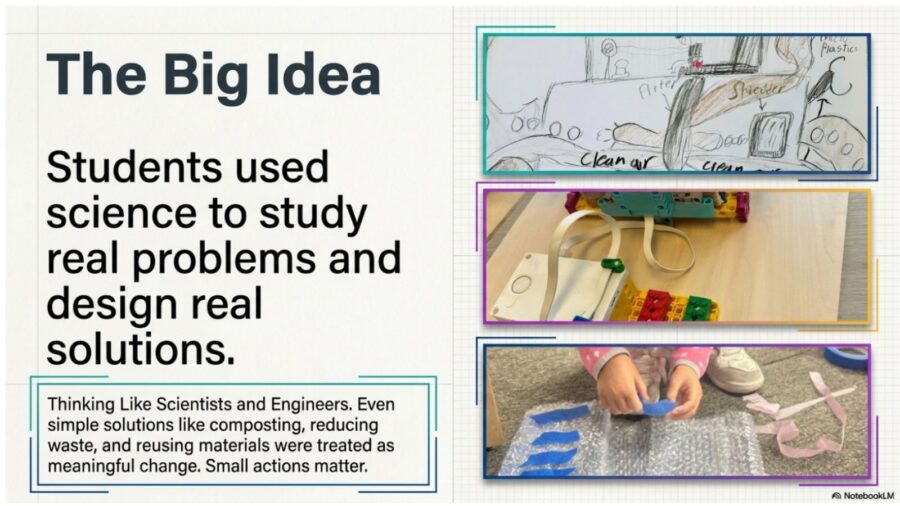
500 TK–5 students at James Madison Elementary in San Leandro, California investigated real-world environmental challenges — from microplastics and waste systems to sustainable fashion and renewable energy — using the engineering design process, culminating in a schoolwide Climate and Environmental Engineering Expo attended by over 250 students and family members.
Detailed Story
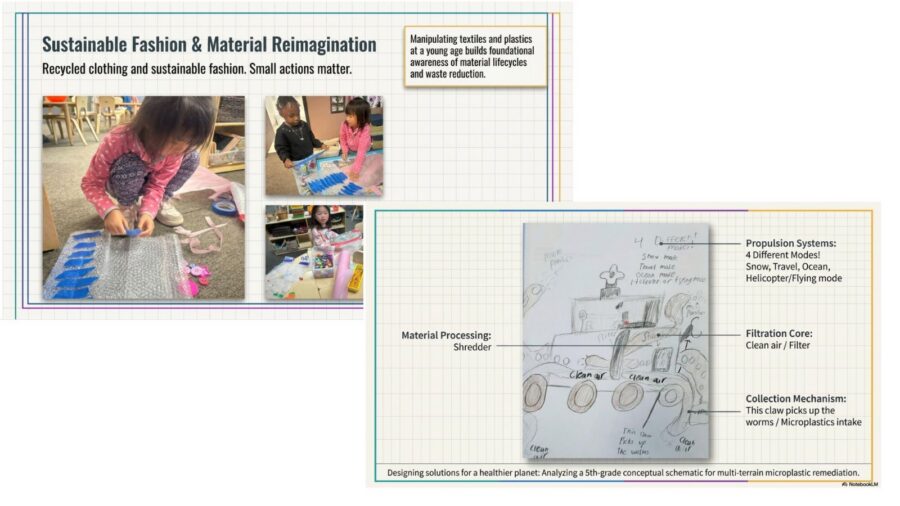
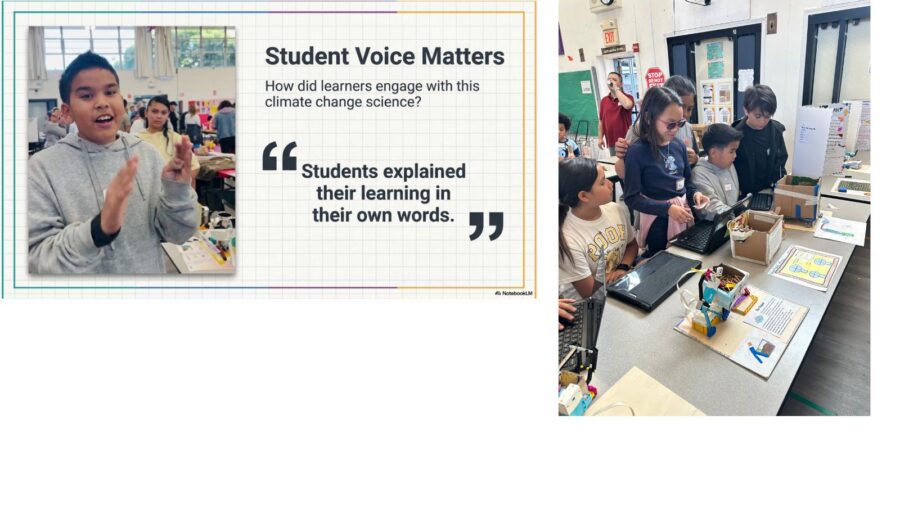
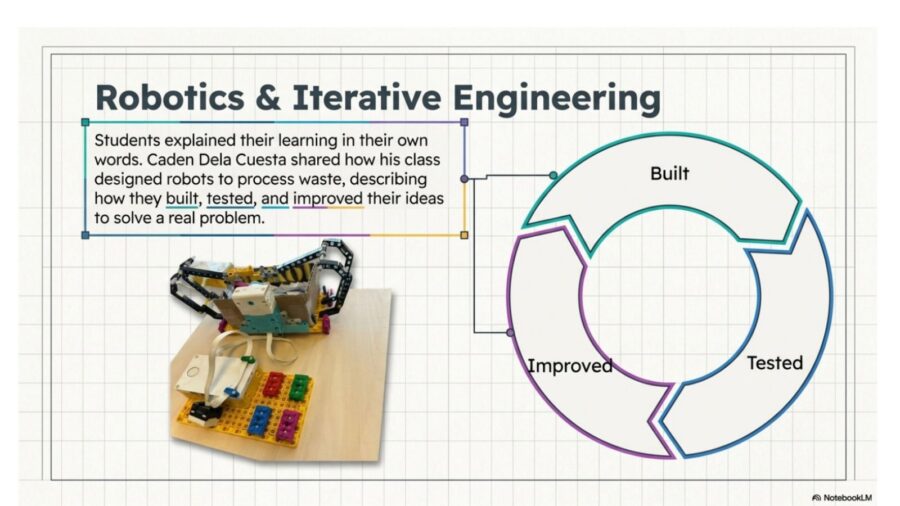
Paulette, Principal at James Madison Elementary in San Leandro, California, helped bring climate science to life for every student in her school — all 500 of them. The Climate and Environmental Engineering Action Project engaged TK–5 students in hands-on, inquiry-based learning grounded in their own school community and connected to real environmental challenges. Students investigated waste, recycling, microplastics, renewable energy, composting, and climate-related events such as hurricanes and landslides. Using the engineering design process, they designed and built solutions: waste-sorting systems, recycled material inventions, musical instruments made from discarded materials, and robots programmed to process waste. Learning was interdisciplinary, weaving together science, computer science, art, and environmental literacy. The project featured rich student voice throughout. Fifth graders in Ms. Fong’s class investigated whether microplastics are a “micro problem” — studying how they enter water systems and designing remediation solutions, including a remarkable student-drawn conceptual schematic for a multi-terrain microplastic collection vehicle complete with a filtration core, shredder, and four propulsion modes. Younger students in early childhood classrooms explored sustainable fashion and material reimagination, manipulating textiles and plastics to build foundational awareness of material lifecycles. Students documented their thinking through models, written explanations, and QR codes so families and visitors could engage with their design process directly. The project culminated in a schoolwide Climate and Environmental Engineering Expo, bringing together over 250 students and community members. Community partners enriched the experience through a robust ecosystem that included Stop Waste, the Marine Science Institute, Alex’s Bee Farm, CRS, Nimble Repair, and the WOEIP Induction Cooktop Project. Students presented confidently, explaining their work to peers and families with pride. One student described iterating on a robot: “We kept testing our robot because it didn’t work the first time, but we figured it out.” Another narrated a hurricane model: “This shows how a hurricane forms and what’s happening inside the storm.” A younger student held up a homemade instrument: “I made this instrument from things we were going to throw away, and it still makes music.”
Impact Statement
500 students across TK–5 investigated real environmental challenges and designed real solutions — from microplastic remediation vehicles to recycled musical instruments — presenting their work to over 250 community members at a schoolwide expo. Students left with deeper environmental literacy, engineering confidence, and the belief that they can understand and impact the world around them.