
From Pocket Forest to Front Yards: The Ecolizers Bring Tree Planting and Nature Journaling to an Entire School
Project Summary
🌿 2026 Changemaker Award — Honorable Mention, Middle School
When a last-minute infrastructure snag derailed The Ecolizers’ plans to plant a Miyawaki Pocket Forest on campus, the student club at Glandorf Elementary pivoted, and ended up doing something bigger. On Earth Day, every student in the school went home with a white oak sapling, a bird feeder, and the start of a nature journaling practice that now extends beyond the classroom.
Detailed Story
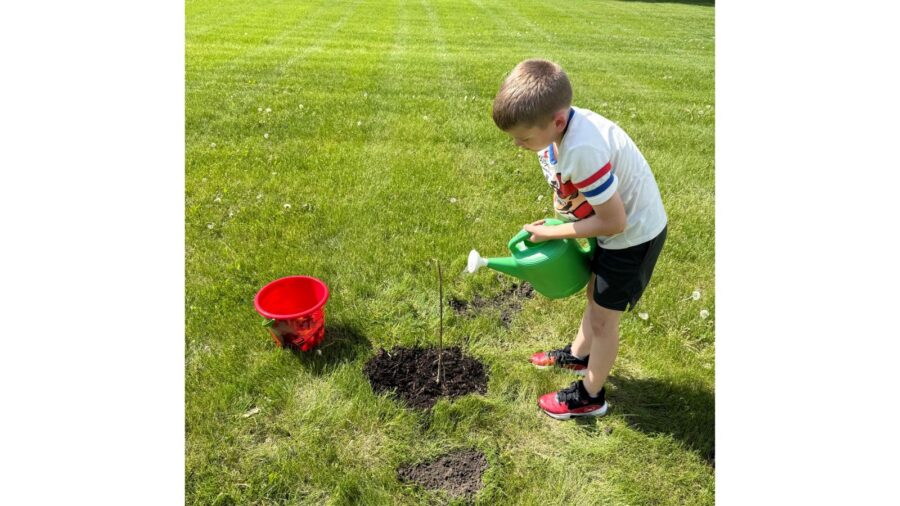
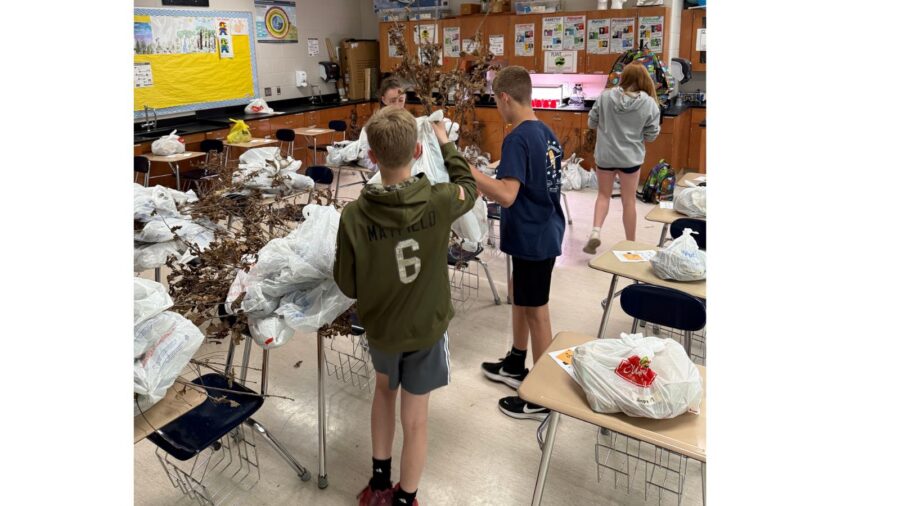
Chris co-advises The Ecolizers, an environmental club at Glandorf Elementary in Ohio, which is working toward NWF EcoSchools U.S. certification. In spring 2025, inspired by their study of climate change and its potential local impacts, the students set their sights on planting a Miyawaki Pocket Forest on school grounds. They chose tree planting specifically because it felt achievable compared to bigger infrastructure changes like permeable concrete or solar panels. But just before ordering the trees, they learned that an unaccounted-for underground line made the planting site unusable. The students were disappointed but not defeated. Chris was already developing a school-wide stewardship project centered on nature journaling, and together with the students, a new plan took shape. Rather than one forest on campus, every family would receive a white oak sapling to plant at home along with a small bird feeder and seed — creating individual sit-spots tied to the same observational skills the students were building in class. A co-advisor introduced all K–6 students to nature journaling through STEM, and teachers across grades began incorporating the journals into their own classrooms as well. Students will take their journals home at the end of the year. The Earth Day distribution itself required some quick problem-solving. The 8th grade Ecolizers were away on their Washington D.C. trip, and the morning of the giveaway, the 7th graders found out they’d be taking an Algebra placement test during the scheduled delivery time. The 6th grade members stepped up. Throughout the day, 7th graders came in during their free time to bag trees, count feeders and seed packets, and label everything — making sure the 6th graders could pick it all up and deliver it to every classroom before dismissal. It worked. Seeing students leave school with trees in hand, and then watching his own son (a student at the school) plant his tree at home, made it all worth it for Chris.
Impact Statement
Approximately 537 students received white oak saplings and bird feeders to plant and hang at home, extending climate learning into family and community spaces. All K–6 students were introduced to nature journaling through STEM, with teachers across grades building on the practice. The project also modeled student resilience and creative problem-solving when original plans fell through.