East Cooper Montessori Wildlife Habitat and Community PSA Project
Project Summary
Middle school students at East Cooper Montessori Charter School transformed a high-traffic walkway into a National Wildlife Federation Certified Wildlife Habitat and created a Public Service Announcement for Mount Pleasant Town Council advocating for community environmental action.
Detailed Story
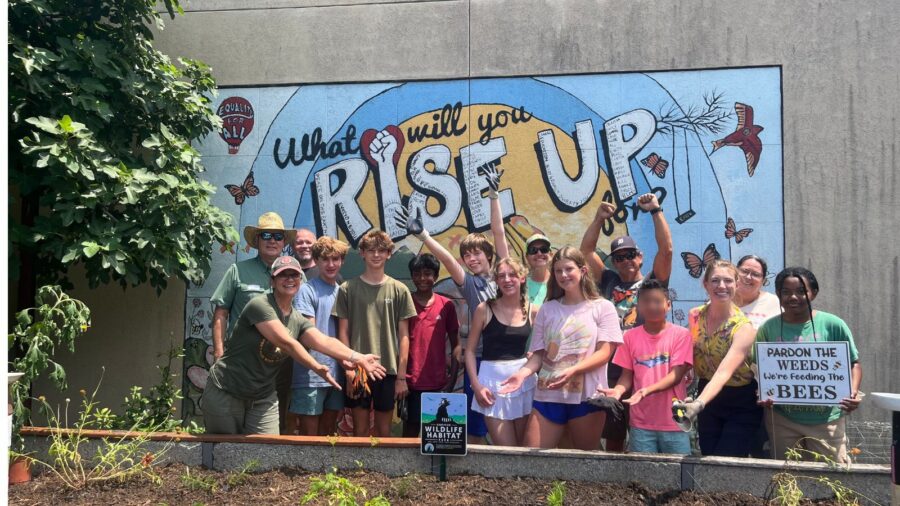
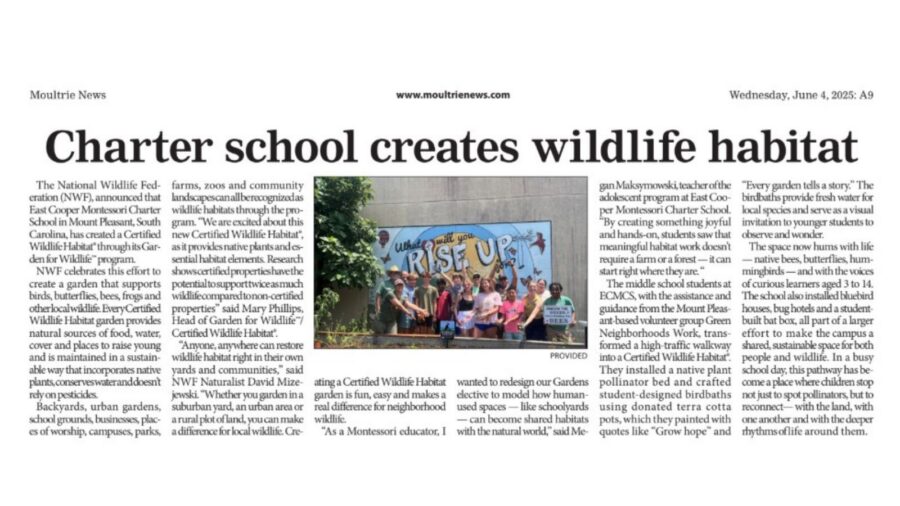
This project empowered students to transform a highly visible part of their campus into a certified wildlife habitat—a space that now models how human-used places like schoolyards can become shared ecosystems. Through research, design, and hands-on implementation, students provided vital elements of habitat: food, water, cover, and places for wildlife to raise young. Working with Green Neighborhoods Work, students installed native pollinator plants, constructed bat boxes, bluebird houses, bug hotels, and creative water sources using donated terra cotta pots they painted with inspirational messages like “Grow hope” and “Every garden tells a story.” The space now supports birds, bees, butterflies, and other local species while serving as daily inspiration for younger students aged 3-14 who pass through. Beyond habitat creation, students produced a powerful PSA emphasizing how everyday choices in Mount Pleasant backyards affect local creeks, marshes, and future sustainability. Their message “It starts in your yards. It flows into our future” was presented to Mount Pleasant Town Council, connecting environmental action to the community’s economy, public health, and identity. Students showed how protecting nature supports tourism, fishing, real estate, and recreation—all dependent on clean water and resilient green spaces. The project earned National Wildlife Federation Schoolyard Habitat Certification and co-certification through the South Carolina Wildlife Federation, generating press coverage and establishing a replicable model for place-based sustainability education.
Impact Statement
Students earned National Wildlife Federation certification, created lasting habitat infrastructure supporting local wildlife, produced educational materials reaching the broader community through Town Council presentation, and established a model demonstrating how schoolyards can become shared sustainable spaces. The project sparked wonder among younger students and provided practical examples of environmental stewardship that students can replicate in their neighborhoods.