
MacroBlitz: Community Science on the Fox River with 46 IMSA Students
Project Summary
46 students from the Illinois Mathematics and Science Academy conducted a large-scale macroinvertebrate biodiversity survey on the Fox River at Red Oak Nature Center, contributing photographic data to the international iNaturalist database and using aquatic bio-indicators to assess freshwater health.
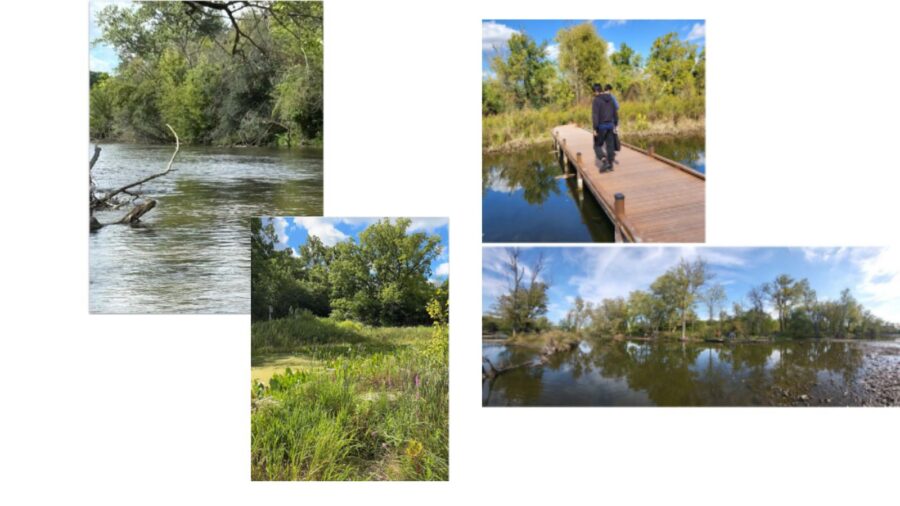
Detailed Story
Sullivan led 46 students from the Illinois Mathematics and Science Academy (IMSA) in Aurora, Illinois through MacroBlitz, an ambitious community science project centered on the Fox River at Red Oak Nature Center. The project’s core question — what macroinvertebrates do you find when you scoop a net or turn over a rock? — drove students to deploy aquatic nets and use their student-designed “Macro-Station 360” to collect and photograph benthic macroinvertebrates, submitting all data to iNaturalist for use by scientists tracking global freshwater health. Coordinating 46 students required genuine organizational thinking: Sullivan established team leads and a division of labor to keep everyone trained, engaged, and producing reliable data. One of the project’s most exciting moments came when a team discovered a pollution-sensitive Ephemeroptera (mayfly) nymph in a section of the river previously recorded as lower quality. As Sullivan described it, this was a turning point for many students when they realized their work had real-world implications. Student reactions captured the spirit of the day: one student said “I usually just walk past the river to get food, but I had no idea there was this much life under the rocks — it’s kind of cool knowing I’m helping scientists by just taking a photo on my phone.” Another reflected, “It’s easy to do when you’re bored, and it actually makes you feel like you’re doing something about the environment instead of just stressing about it in class.” Sullivan brought three supporting resources to the project: a student-created MacroBlitz presentation, a dichotomous key lesson from Dr. Amacher’s class, and a leaf pack project introduction from Red Oak Nature Center.
Impact Statement
46 students contributed real biodiversity data from the Fox River to the international iNaturalist database, discovering a pollution-sensitive mayfly nymph in an area of previously recorded lower water quality. As one student put it, the project made them feel like they were “doing something about the environment instead of just stressing about it in class” — turning a day of fieldwork into a shift in how students see their own capacity for scientific impact.