
A Costa Rican Dream Comes True!
By Diana Allen
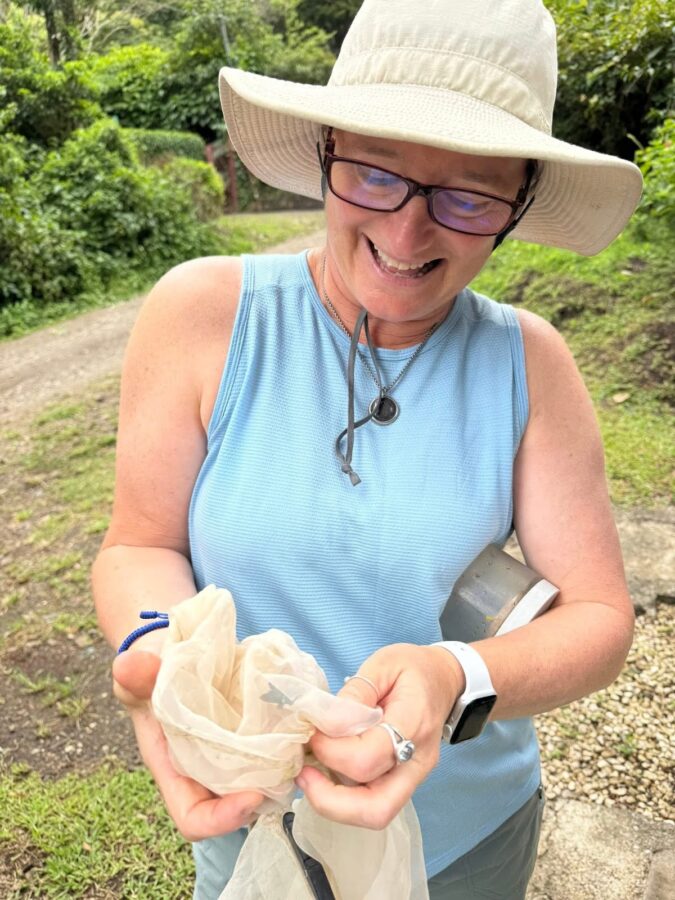
In the early 2000’s while sitting in a doctor’s office waiting room, I opened a magazine that amazed me and signified the beginning of decades of dreaming for far off adventures. The magazine was actually a catalog from Earthwatch, an organization that connects people and scientists with the mission of conserving our planet. Their worldwide expeditions enable people to join in and contribute to scientific field work (think saving sea turtles in Costa Rica, studying climate change and Pink River Dolphins in the Amazon river basin, just to give you a taste). Decades later, browsing the Earthwatch website for the hundredth time, I discovered that they offer teacher fellowships! So the summer of 2025, my decades old dream came true.
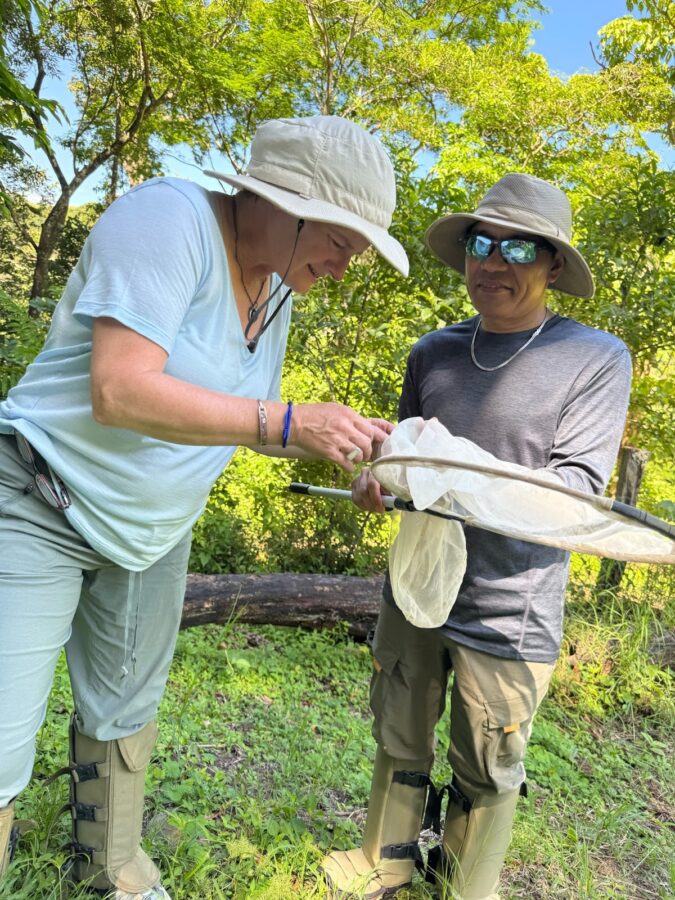
My fellowship set me up in Monteverde, Costa Rica, a cloud forest situated on the Pacific and Atlantic slopes of the continental divide, with 10 other educators and two scientists. Our work was to research wild bees and other pollinators with four core objectives: 1) understand how climate change and habitat loss will impact native bee species and the ecosystem service of pollination 2) how agroforestry systems like the silvopasture and home gardens can be managed to support pollinators and pollination services 3) determine which plant species have the greatest potential for use in the restoration and conservation of pollinators and pollination services 4) improve knowledge and taxonomy of Costa Rica bee species. Over six days we set about to do what we could toward these goals.
Getting out in the field each day we rotated between different plots of land planted with native plants to determine which attracted the most bees. We had nets and acetone laced containers as tools for collection. We were taught proper scientific labeling, first things first, no pens, they can bleed. We met with small farmers with a strong desire for sustainable farming. We enlisted practices such as polyculture, agroforestry, wild bee pollination and sustaining biodiversity by planting native species. Many of these practices will be engaging new additions to my life and environmental science focused lessons. My goal is always to get students outside and participating in real world science, this is much more successfully met when I have experienced field work myself. Hearing first hand from conservationists like Dr. Fabricio Camacho, who came to speak with us one evening, sharing his passions of agroforestry and conservation improved my knowledge and confidence so I can better teach these important topics to my students.
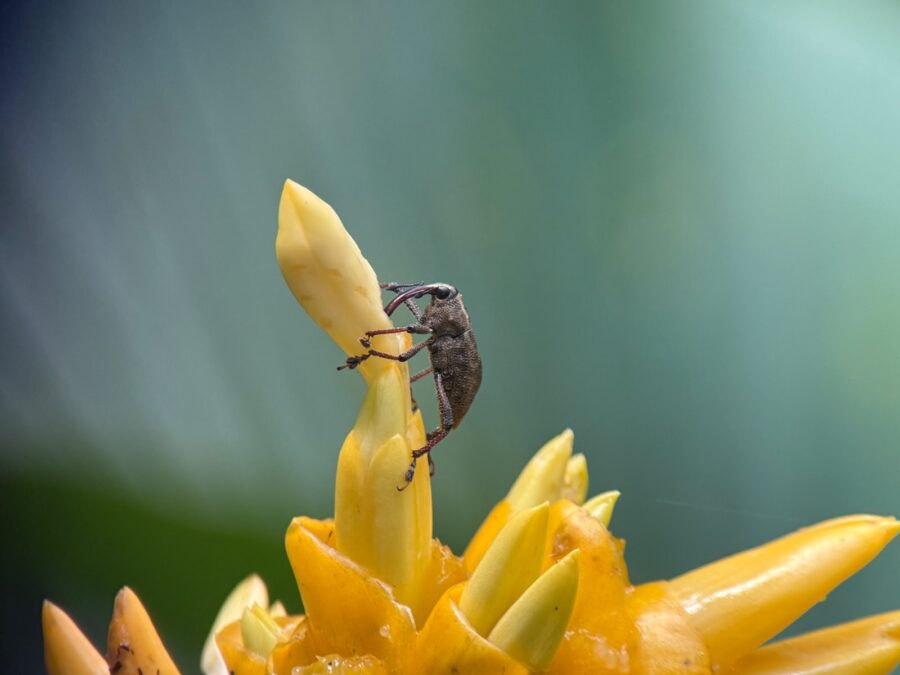
I am eager to get back and share my new experiences with my students this coming year and hopeful that my dream-come-true adventure to Costa Rica will further help me transform my classroom into a rich, immersive science-filled space.
Costa Rica is the second trip I have taken to participate in field work for ongoing science research, the first was Yellowstone. Both of these experiences have helped me improve my hands-on science teaching. Until I took these trips I didn’t really know what scientists do in the field, how research started from an idea, moved to field work and eventually became knowledge we can put into practice.
If I could encourage a young educator to strive for anything, at the top of the list would be to experience your content. I do not feel it is of utmost importance for teachers to be degreed-experts in their content areas, helpful yes, but not more so than a passion to teach, a passion for your content, a natural ability to connect with students. But joining opportunities through organizations like Earthwatch, who give the opportunity to immerse your senses in what you teach, so that you may come back and inspire by sharing incredible experiences- invaluable.
