#AirQuality
A Changing Climate Is a Children’s Health Issue
By Meagan Cooper
Today, October 8, is Children’s Environmental Health Day. The idea behind it is close to my heart: that all of us, working together, can give every child a healthier, safer place to grow up, and that fewer kids should be getting sick from things we know how to prevent. The climate our kids grow up in is a big part of that.
Why kids are affected first
Kids are not small adults. For their size, they breathe more air, drink more water, and eat more food than we do, and their bodies are still developing. The same exposure lands harder on them.
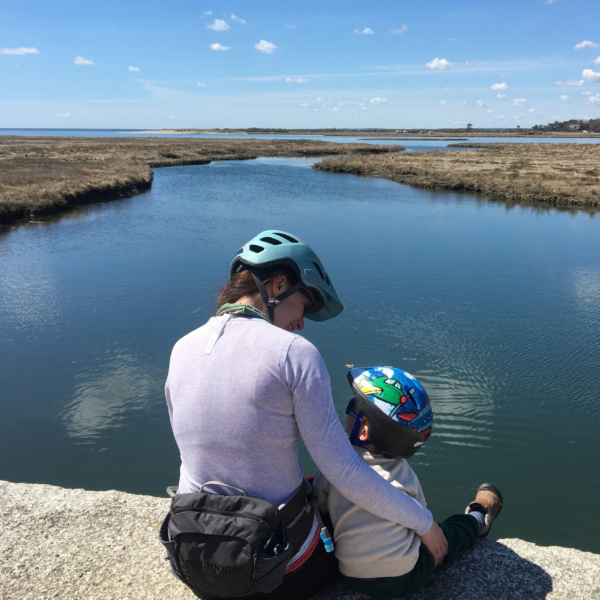
I learned this as a parent before I understood it as a professional. A few years ago, my son was exposed to mold at his school, and it was the start of a long road for his health. What I came to understand is that it was never only the mold. Environmental exposures can layer on top of each other and wear on a child’s immune system slowly, over time. For us, that road led this past spring to a diagnosis of PANDAS, a condition in which a child’s immune response affects the brain. It changed how I look at the places where kids spend their days, and how I see my work at The Climate Initiative.
What a changing climate has to do with it
The mold at my son’s school took hold over a hot, humid summer, and summers like that are becoming more common. Wherever you live, you have probably seen your own version of this:
- Pollen season starts earlier and lasts longer, so allergies hit kids harder.
- Milder winters mean ticks are showing up in places they never used to be, and Lyme disease is spreading with them.
- Wildfire smoke means days when kids stay in from recess, sometimes hundreds of miles from the fire.
- Extreme heat cancels practices and closes playgrounds.
- Drought strains the farms that grow what our kids eat.
- Bigger storms flood homes and schools and leave behind the damp conditions where mold grows.
A changing climate makes each of these problems worse, and kids feel it first. Many of them are growing up with summers, smoke seasons, and storms we never faced at their age. And not every family has the same means to protect their kids. A child’s zip code should not decide how healthy that child gets to be.
Clean air and clean water are not a given. They exist because people insisted on them, and the standards that keep them clean are children’s health protections, whatever else we call them. Our board member, retired Lt. General Russel Honoré, describes clean air and clean water as a human right that belongs to everyone, and he is clear about what follows: “Nobody has the right to take that away.” His answer is one we hear from him often: fighting pollution is the solution.
Why are kids getting sick?
Outside of work, I volunteer with The Ayla Foundation, which my friends Erin and Tim Slivka started in memory of their incredible daughter Ayla, who died at six of DIPG, a rare childhood brain cancer. Brain cancer is the leading cause of cancer death in children and teens. Most families who hear “your child has cancer” never learn why. Scientists are still working out how much of a part environment plays, and some communities are asking for help finding out. In southeastern Kentucky, more than 4,000 people have signed a petition asking the state to review what looks like an unusual number of DIPG diagnoses in their region. They are not claiming to know the cause. They noticed a pattern and asked for answers, because we can’t prevent what we don’t understand.
Anyone can be a citizen scientist
That is what citizen scientists do, and it is where I find hope in my work. Six years at The Climate Initiative have taught me how much regular people can do when they notice what is going on around them, ask good questions, and keep track of what they find. You do not need a lab coat to do that. Parents can do it at home, at school, and in their communities, and students can too. People who understand how their environment affects their health are better prepared to protect it, for their own families and for everyone around them.
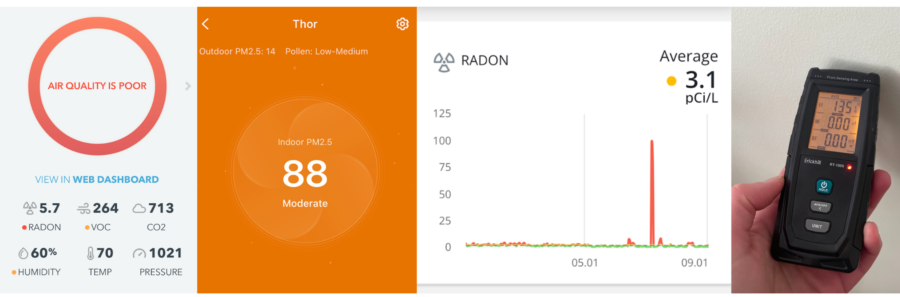
It is also what we teach. At The Climate Initiative, our Learning Lab modules help young people build those same habits, and they have reached more than 750,000 students through 7,200+ educators all over the globe. This year’s Climate Change and Human Health Learning Lab helps them connect a changing climate to their own health.
What you can do today
The Children’s Environmental Health Network started Children’s Environmental Health Day in 2016, and it falls on the second Thursday of October every year. You do not need to overhaul your life to take part. Pick one:
- If you teach, or know someone who does, bring the topic into the classroom. TCI’s Climate Change and Human Health Learning Lab is a good place to start.
- Take a closer look at where your child spends the most time, at home and at school. Begin with the air in their bedroom, since they spend so many hours there.
- Look at one thing in your home with fresh eyes. I recommend starting with chemicals. The cleaning products under your sink and what you use on your lawn are great first steps.
- Tell one other friend, parent or teacher about today.
Every child deserves a healthy place to grow up. No parent, teacher, or organization gets there alone, and that is the point of today.