

Your story could change everything — including your summer.
Every day, educators across the country are turning climate science into community action. We want to hear how you’re doing it.
Submit your Story of Change by May 31st for a chance to be named a TCI Changemaker — and to be celebrated at our Changemakers Evening for Action on Tuesday, July 28th in Saco, Maine as part of our 6th Annual Climate Educators Retreat, alongside fellow educators, donors, and advocates who believe in this work.
What makes a Story of Change?
Tell us about a lesson, a project, a conversation where climate education sparked something real in your students or community. Big or small, we want to hear it!
The next Changemaker could be you.
Explore the Climate Action Map
Get inspired by Stories of Change.
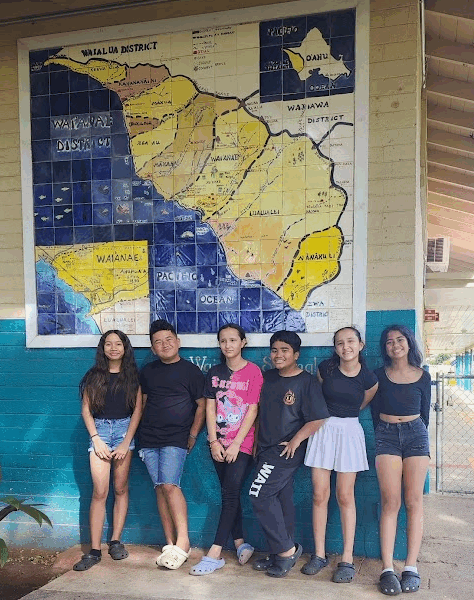
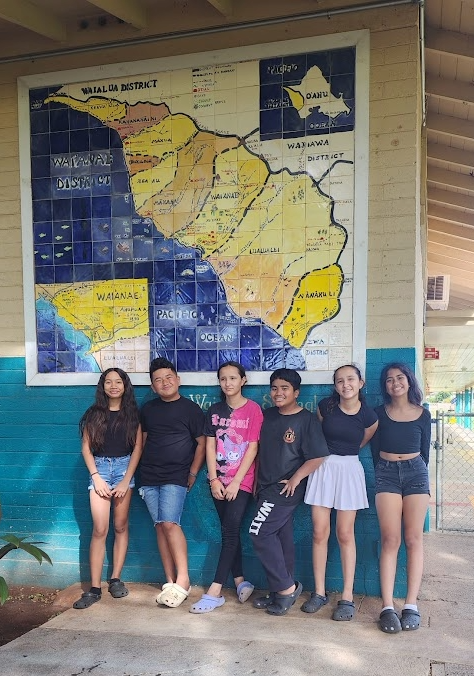
Empowering Students as Climate Advocates
 Waianae, Hawaii
Donna S. & students from Waianae Elementary
When the Lahaina wildfire devastated parts of Maui in 2024, students at Waianae Elementary on Oahu felt compelled to respond through a project that would both educate themselves and their community. Teacher Donna Soriano guided her 25 students through The Climate Initiative’s Wildfires Learning Lab, using the tragedy as a springboard for climate education and community action.
Located in the dry, western region of Oahu, Waianae Elementary students were particularly motivated to address a climate threat relevant to their local environment.
Research and Understanding
Students began with extensive research on the Lahaina wildfire, investigating its causes, environmental impacts, and community consequences. Through classroom discussions, they explored the connection between climate change and increasing wildfire frequency and intensity.
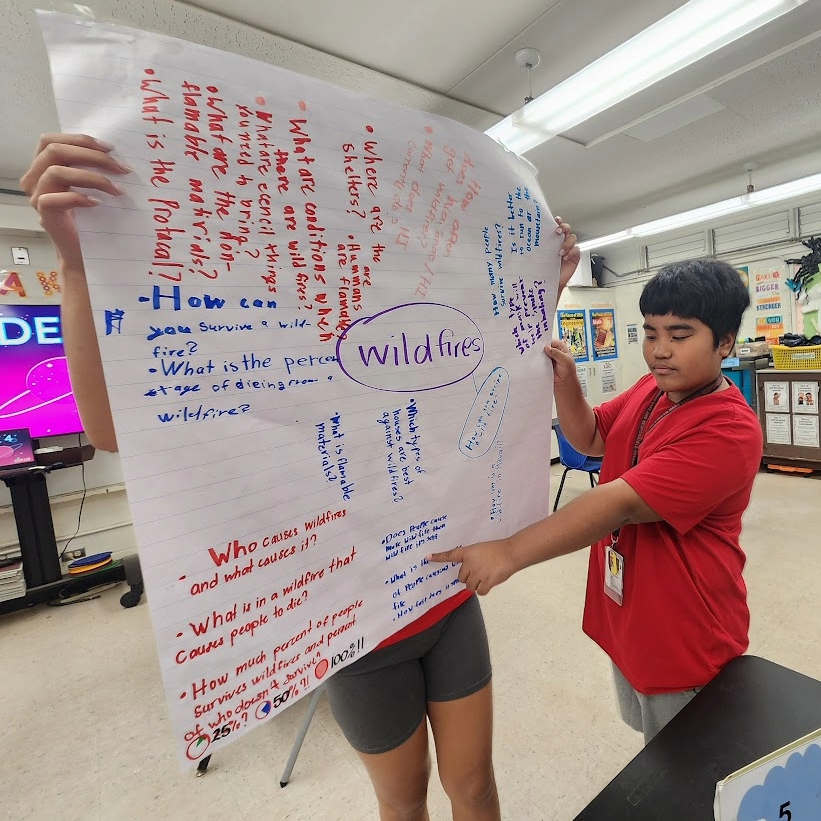
The students worked collaboratively, documenting their findings on large posters that highlighted key questions:
- “Who causes wildfires and what causes it?”
- “What is in a wildfire that causes people to die?”
- “How much percent of people survive a wildfire?”
Their research revealed the relationship between climate factors and wildfire risk, something particularly relevant to their dry, coastal community.
Creating Their Message
Working in small groups, students brainstormed and drafted PSA content that would effectively communicate prevention strategies and climate action steps. They used technology including drone photography to document their work, combining compelling visuals with informative content.
The final PSA was distributed through social media, the school website, and local community centers, reaching a broad audience throughout the Waianae community.
Student Voices
The project had a profound impact on participating students:
“I never thought our voices could make such a difference. It feels amazing to share our message with the community!”
“Working on the PSA taught me how important it is to take action against climate change; I want to continue advocating for our planet.”
Impact
Through this action project, students not only learned about the science of wildfires and climate change but also developed valuable collaboration, research, and communication skills. The community response was overwhelmingly positive, with many expressing gratitude for the students’ efforts to raise awareness about wildfire prevention in a region vulnerable to such threats.
The project enhanced climate literacy among 25 students while reaching hundreds of community members through the PSA distribution. Students developed skills in research, collaboration, multimedia creation, and public communication, while also gaining confidence in their ability to address environmental challenges.
Students Reached: 25
TCI Resource Used: Wildfires Learning Lab

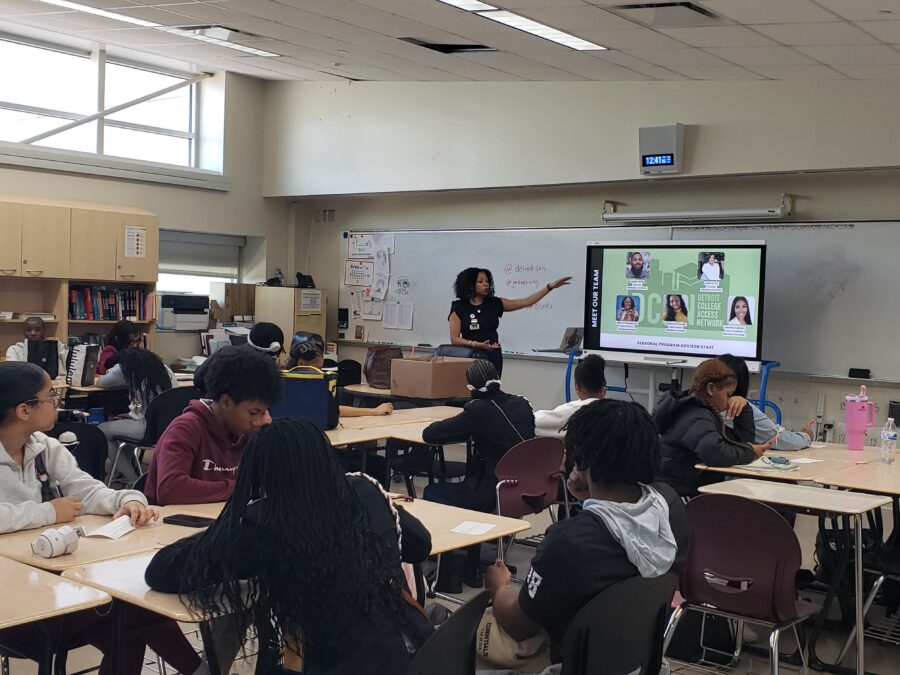
Integrating Climate Justice with Mathematics: Detroit Urban Water Project
Detroit, Michigan
Dr. Connie M.
Algebra students at Renaissance High School applied mathematical concepts to examine climate justice issues related to clean water access and flooding in urban Detroit communities, with particular focus on impacts to marginalized neighborhoods.
Connecting Math to Environmental Justice
Algebra 1 and 2 students integrated mathematics with environmental justice by applying data analysis, exponential functions, and quadratic functions to investigate clean water access and flooding concerns in Metro Detroit. Located in an area surrounded by several bodies of water including the Detroit River, students learned to critically examine how climate impacts disproportionately affect marginalized communities through a combination of mathematical analysis and climate justice education.
The project began with students analyzing a 2025 article from Planet Detroit entitled “Michigan Climate Action Plans Must Better Address Marginalized Communities: Study,” which highlighted research from Michigan State University demonstrating the need for climate action plans to incorporate voices from underprivileged Detroit communities and address racial and economic inequalities.
Bringing Math to Life
Working in pairs, students transferred their algebraic skills to real-world applications while developing as global citizens and critical thinkers. They used digital tools like Desmos.com for graphical analysis and climate simulators to visualize data patterns and potential solutions.
The project extended beyond the classroom when students partnered with the school’s Green Club to participate in an Earth Day 2025 campus cleanup, connecting mathematical concepts with tangible environmental action.
Creating Solutions
For their final assessments, students conducted research, created data visualizations, and delivered oral presentations that proposed practical solutions to local flooding issues, including a community warning alert system for residents in vulnerable neighborhoods.
The project helped students recognize the connections between climate justice, racial equity, and mathematical literacy. Perhaps most significantly, students developed community education scripts to engage fellow citizens about Detroit’s climate impacts on Black, Indigenous, and People of Color (BIPOC) communities and urban farms/gardens, transforming abstract mathematical concepts into tools for social and environmental advocacy.
Impact
The project successfully integrated mathematical concepts with climate justice education, helping 35 algebra students apply abstract skills to real-world environmental challenges affecting their own communities. Students developed practical solutions addressing local flooding concerns, including a warning alert system tailored to the needs of Detroit residents in vulnerable areas.
The mathematical analysis of climate data built critical thinking skills while highlighting how environmental impacts disproportionately affect marginalized communities. By creating community engagement scripts about climate impacts on BIPOC neighborhoods and urban farms/gardens, students developed communication tools to advocate for environmental equity beyond the classroom.
The classroom visit from a Planet Detroit representative provided students with connections to local environmental journalism and expanded their awareness of career pathways combining mathematics with climate advocacy. For many participants, this was their first exposure to The Climate Initiative’s programming, opening doors to continued environmental engagement through mathematics.
Students Reached: 35
TCI Resource Used: Climate Justice and Equity Learning Lab
Elementary Students Clean Up Fort Belknap Reservation
Hays, Montana
Tammy & Fort Belknap Elementary Student Body
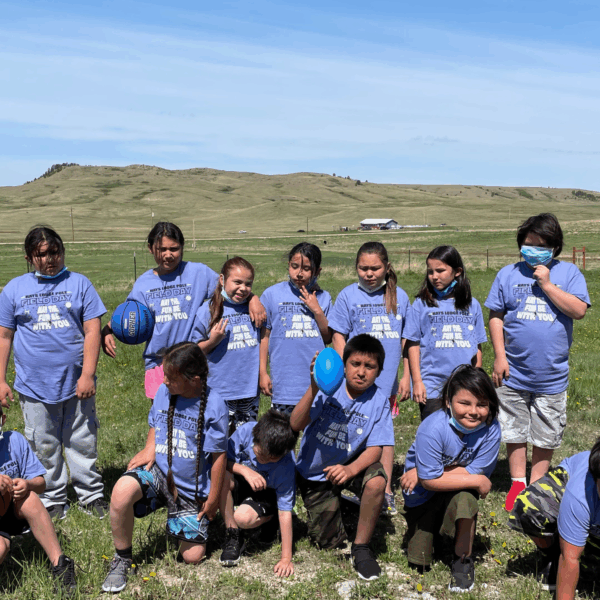
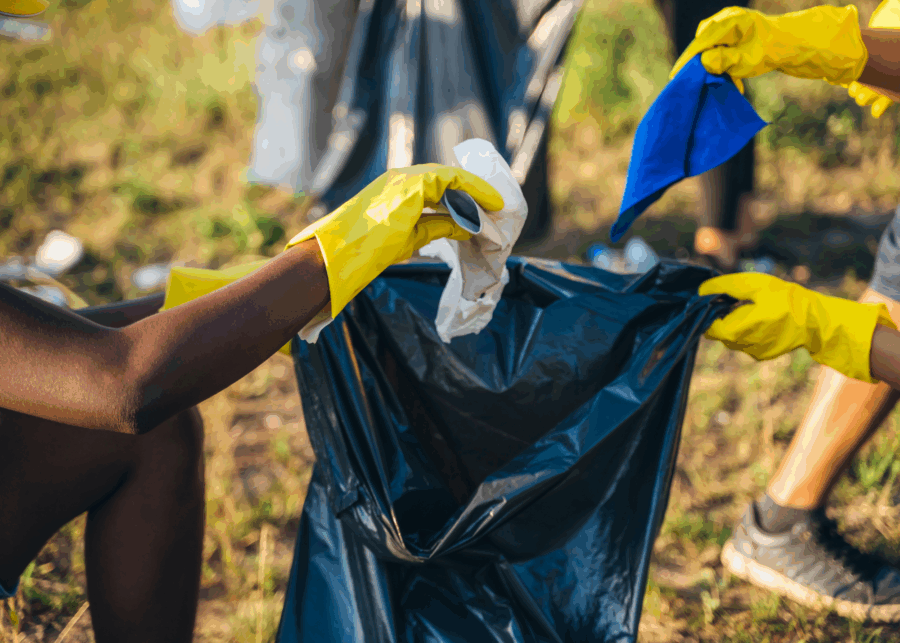
The entire elementary school at Hays-Lodgepole, from kindergarten through sixth grade, dedicated an afternoon to cleaning up their community environment on the Fort Belknap reservation. Students worked together to remove litter and debris from ditches surrounding their school and along the highway, taking ownership of their community spaces and developing a deeper understanding of environmental stewardship.
Questions and Conversations
Throughout the activity, students discussed what they found in the ditches and questioned why people would discard items rather than dispose of them properly. The experience prompted meaningful conversations about waste management and community responsibility, with students actively thinking about how to keep their community cleaner in the future.
Building Pride and Connection
Beyond the immediate environmental impact, the project fostered a sense of pride and accomplishment among the students, helping them see themselves as capable agents of positive change within their community. The cleanup initiative not only beautified the local area but also strengthened students’ connection to their tribal lands while demonstrating the power of collective action in addressing environmental challenges.
Students left the experience with increased awareness about proper waste disposal and a stronger commitment to protecting their reservation’s natural environment.
Impact
The cleanup effort removed substantial litter and debris from roadside ditches and areas surrounding the school on the Fort Belknap reservation, immediately improving the local environment. Students developed a stronger sense of environmental responsibility and community pride, with many expressing interest in continuing similar projects and maintaining cleaner community spaces.
The project promoted reflection and critical thinking among students about waste management practices in their community, encouraging them to consider sustainable solutions for the future. By involving the entire elementary school population of 125 students, the initiative created a shared experience that reinforced environmental values across grade levels and demonstrated the significant impact possible through coordinated community action.
Students Reached: 125
TCI Resource Used: Civics Climate Action Learning Lab
Resilient Schools and Communities: Beach Grass Planting Project
Brooklyn, NY
Emily F. & Students from K-12 NYC
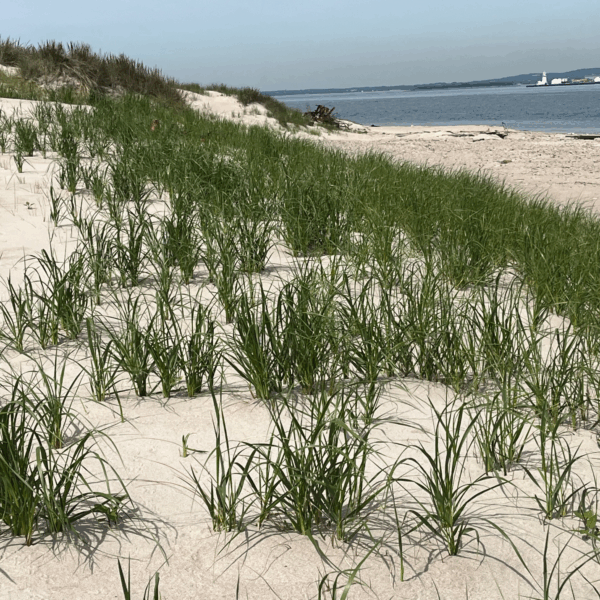
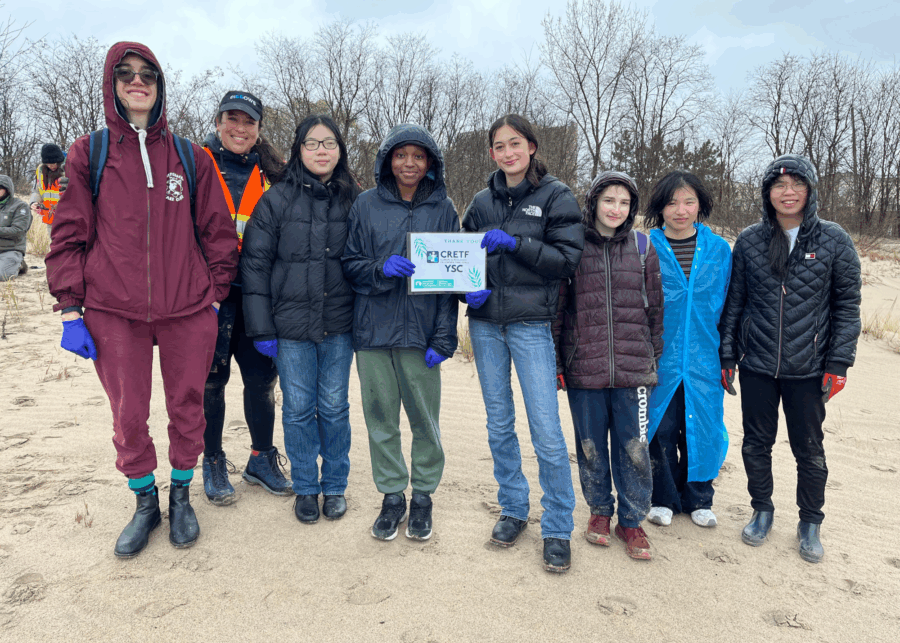
Students and teachers from 20 public K-12 schools in New York City partnered with the National Wildlife Federation to plant 22,000 American Beach Grass plants in Coney Island Creek Park, Brooklyn, creating living shorelines to protect communities from flooding while learning about sea level rise and green infrastructure solutions.
Understanding the Challenge
Through the National Wildlife Federation’s Resilient Schools and Communities (RiSC) program, over 500 students from 20 public K-12 schools across New York City participated in hands-on climate resilience action. This multi-year project has resulted in planting over 61,000 plants covering approximately 2.25 acres since 2022, with 22,000 plants added in the most recent phase.
Students learned about sea level rise impacts firsthand, discovering that during Hurricane Sandy, water levels in Coney Island rose 12 feet and that sea levels are projected to rise 6 feet by 2100 without climate intervention.
Nature-Based Solutions in Action
The project provided tangible experience with low-cost green infrastructure solutions, teaching students how beach grass creates underground root networks that stabilize sand dunes, combat erosion, and create living shorelines to protect nearby residents from flooding.
Students gained understanding of how human-made coastal areas like parts of Coney Island are particularly vulnerable to climate impacts and how nature-based solutions can provide community protection. The project also included beach cleanup activities and identification of invasive species like sea chestnuts.
Student Voices
Student reflections demonstrate deep learning about climate impacts on vulnerable communities and the power of collective environmental action. Many expressed hope and agency through their ability to create “long-lasting positive impact” and work toward “giving communities better protection from water.”
Impact
Students planted 22,000 beach grass plants in the most recent phase (61,000+ total since 2022), covering 2.25 acres of coastal area to create living shorelines protecting vulnerable communities from flooding. The project educated 500+ students about climate impacts and green infrastructure solutions while providing hands-on experience with nature-based climate adaptation.
Students developed understanding of environmental justice issues affecting coastal communities and gained practical skills in ecosystem restoration and climate resilience strategies. The project demonstrates how youth leadership can create lasting environmental infrastructure that will protect communities for years to come.
Students Reached: 500+ (from 20 NYC schools)
Teacher: Emily F.
Partner Organizations: National Wildlife Federation, 20 public K-12 schools across NYC including Robert F. Kennedy School Manhattan, I.S 281 Joseph B Cavallaro Brooklyn, JHS014 Shell Bank School Brooklyn, Institute for Collaborative Education Manhattan, and Brooklyn Technical HS
TCI Resources Used: Emergency Preparedness Toolkits, Sea Level Rise Learning Lab
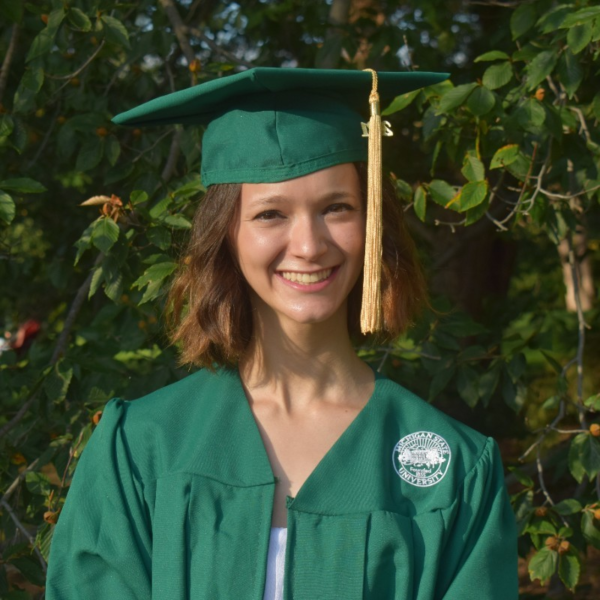


From Paralysis to Power: Finding my voice in the climate conversation
Jessie Cohen
Young people have been bombarded by stories of climate doom our entire lives. Growing up in Michigan, climate news often centered around freshwater scarcity, and how people were going to be flocking to the Great Lakes and “stealing our water”. I heard these messages so often that I, as a young child, tried to limit my water intake. Large media organizations such as the New York Times or CNN regularly published stories espousing climate milestones that humanity needed to reach, or not reach, to “save the planet”. When I was five, Al Gore’s Oscar-winning documentary “An Inconvenient Truth” hit theaters and brought with it a fresh wave of climate terror. Eleven years later, “An Inconvenient Sequel” rocked audiences again, myself included. All of this punctuated by the ever present WWF ads featuring polar bears drifting away on pieces of ice just barely big enough to carry them.
As evidenced by these examples, my understanding of the climate emergency has been shaped by the media from a young age. Watching all this unfold, I felt, and still feel, a strong sense of urgency and an obligation to be part of a solution. However, through all of this, I never gained a real understanding of what I could do as a relatively powerless (or so I thought) young person. Enter The Climate Initiative.
When I came across The Climate Initiative, my mindset toward climate advocacy was one of desperation but no direction. This is not uncommon among young people; a study by the American Psychology Association shows that about 84% of Americans aged 16-25 suffer from “climate anxiety”. Often, the emotional distress of climate anxiety is enough to cause “eco-paralysis”, where individuals feel too overwhelmed by grief to do anything at all. This is a huge issue impacting people across the country and the world, and contributes to inaction.
I am a victim of climate anxiety, and was, to a large extent, affected by eco-paralysis. Until I started reading stories from TCI. Unlike so many outlets, mainstream media and nonprofits alike, The Climate Initiative acknowledges the scale of the problem, but also actively seeks to instill a sense of hope. Through TCI I also found other organizations that centered their messaging around hope and solutions, not fear. For the first time, I felt empowered about my ability to be a part of real change.
As an aspiring environmental advocacy writer and journalist, I feel my place in the climate justice movement is to tell stories to inform and empower audiences. My experience learning about climate change (and other social issues) through various forms of media has taught me just how much power the media holds in our society. It can either be a major contributor to the problem, or a major player in the solution, and unfortunately it seems to have created more problems than it has solved in its portrayal of the climate crisis. Despite what I can only hope to be its best intentions, traditional media has been unsuccessful in its attempts to create meaningful change because of its emphasis on fear rather than hope. I strive to do what the media I consumed my entire life did not; empower people to make change instead of overwhelming and paralyzing them. By presenting information in a way that conveys urgency but does not add to feelings of climate anxiety that can cause inaction, we can grow the climate movement in a huge way, and this is what I hope to accomplish with my writing.
Since I began writing about these issues, I have developed a greater sense of confidence in my ability to be a leader in the climate conversation. I feel more informed and better able to have productive conversations with people in my life about the issues and what they can do to make change. Suddenly, I have been able to take issues that cause me so much anger and fear and discuss them in a way that feels constructive. My writing has included shedding light on the existence of sacrifice zones, discussing the greed of Big Oil, and providing guidance for individuals voting in the 2022 elections on the environmental track record of their candidates. Looking to the future, I am excited to continue to use my voice to keep audiences up-to-date on the latest environmental news and other topics that spark hope and can empower people to get involved, such as the indigenous-led fight for land rights and environmental reform.
Being able to be part of the climate conversation through my writing has given me a sense of power, courage, and hope. Best of all, the platform I have used to make my voice heard is available to almost everyone; the internet. In terms of communicating a message to a large group of people, there is no better resource than the internet. For better or for worse, the internet is a place where all voices can be heard. Anyone can post information on their Instagram or Twitter page and enter into a conversation. This is an enormous amount of power, and it is crucial to acknowledge that for this movement to maintain credibility, activists need to use it responsibly. Content with inaccurate or exaggerated information has the ability to reach a huge number of people and can derail momentum toward legitimate action. Keeping this in mind, with an understanding of the influence of media and the ability to communicate with vast audiences at our fingertips, we all have the ability to become leaders in the fight for climate action.
– Jessie Cohen
Read Jessie’s blogs here
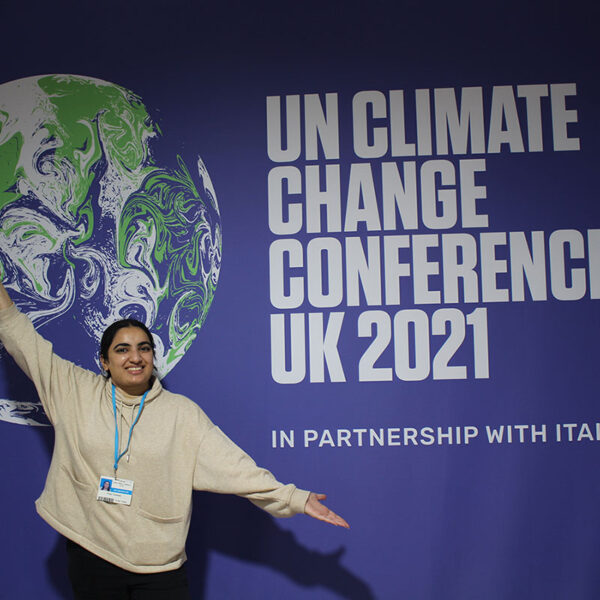
Creating (climate) community for youth
Philadelphia, Pennsylvania USA
Pooja Tilvawala
Description: Pooja’s plan to empower other youth around the nation, and world, became a reality when she won TCI’s first #ClimateCareer Competition in Fall 2020. Watch Pooja’s video about the creation of Youth Climate Collab and check out the links below to learn more about Pooja’s Story of Change through youth engagement.
Climate Career Reflections & Learnings
Pooja’s Takeaways from COY/COP26
Register for an upcoming Climate Courage Workshop

Creating a “hack” for eutrophication
Watsonville, California
Phoebe Jiang, Makayla Glover, Grace Goodhue, Jasmine Mon
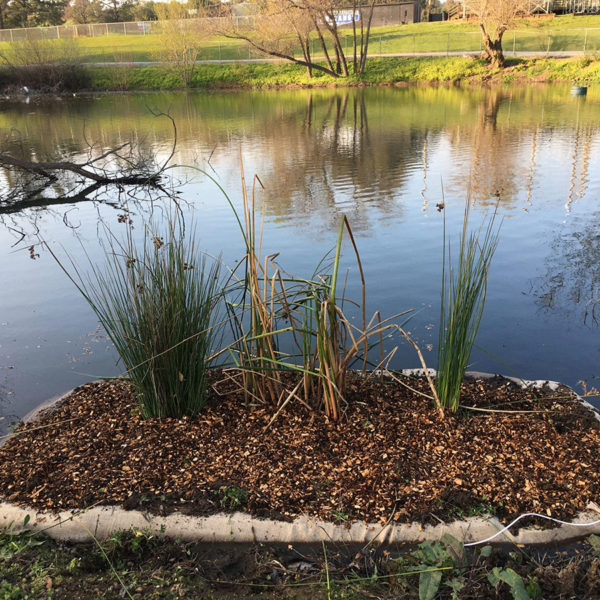
As part of TCI’s first ever Soil and Water Hackathon competition, high school student team members of “The Mustangs” were motivated to combat the issue of eutrophication. Eutrophication occurs when a layer of excess minerals and nutrients forms on top of a body of freshwater. This results in a drastic increase in algae blooms. The algae blooms decrease oxygen levels, which causes fish to suffocate and die. The dead fish emit a foul odor, attracting a high mosquito population. The Mustangs’ school, located in the Salinas Valley in California, is surrounded by farmland and fertilizer runoff causes problems in surrounding bodies of water. Their biology teacher, Mr. Smith first presented the students with the idea of floating wetlands as a solution to the eutrophication in their campus ponds. The students were intrigued about this unique solution and developed their winning climate action “hack”: building floating treatment wetlands to remediate eutrophied pond water and provide habitat for wildlife. Learn more about The Mustangs plan via the below links!
Mustangs Blog Post
Updated Project Presentation
About TCI’s Hackathon Competition
Educating community about climate change
Kennebunk, Maine
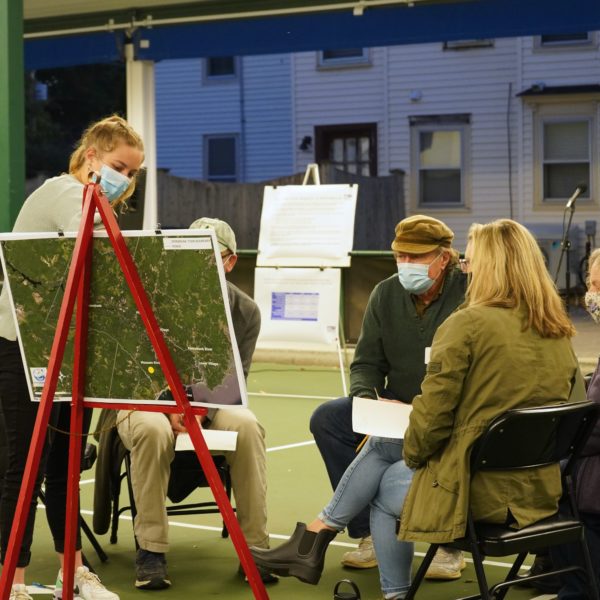
High school students in the Gulf of Maine Field Studies Class at Kennebunk High School hosted two community conversations in the 2021/2022 school year. The Community Conversations model from TCI consists of communication exercises, participatory mapping, and a climate change simulation. Each activity is designed to help people relate their personal places to the larger picture of climate change. Working together to go through this process, and when led by disarming youth voices, communities collaborate on determining what places are of most importance, and ways to effect change. The workshop ends in a brainstorming session on what actions are necessary to move forward toward climate mitigation, and if that’s not possible, adaptation practices and policies to be explored.
“I was blown away by the students’ work, presentations, and in-depth knowledge. From invasive species to shoreland erosion to community resilience, these high school students are completing high-level research on topics that communities need to be aware of. The Community Conversation was so powerful that it stuck with me through the week. After participants learned some communication and listening tools, the students skillfully facilitated small group discussions on challenging topics. Every community needs Community Conversations!” Eli Rubin, Town of Kennebunkport Town Planner.
Learn how to host your own Community Conversation and what other climate action projects the Gulf of Maine Field Studies students are up to:
Community Conversation Toolkit
Gulf of Maine Field Studies Class Website and Current Projects

Your story goes here!
Worldwide
We can’t wait to showcase your story next!

Changemaker Awards
Each year at our educator retreat, we honor an outstanding educator through our Changemaker Awards. This award celebrates the inspiring leadership that empowers students to take climate action. Our most recent award winner, Christine Girtain, developed an amazing project about corn!
Learn more about her project and its results here
This year’s prizes:
1st place: Full retreat experience + travel + $1,000 stipend
2nd place: $700 stipend
3rd place: $300 stipend
Honorable mentions: TCI swag package All winners receive a press release shared with their school and community Winners will be celebrated at our Changemakers Evening for Action on Tuesday, July 28th in Saco, Maine.